Showing posts with label green roof. Show all posts

Monday, June 22, 2015

Little Free Library #12129

Little Free Library #12129 is in action!  This has been on my project list for over a year, and I am glad to get it crossed off.


I love the idea of the Little Free Library, and I wanted to participate and spread the word, but I have no idea how or of it will get used.  But really, I like building things.

The Little Free Library organization has a wonderful mission:
  • "To promote literacy and the love of reading by building free book exchanges worldwide.  To build a sense of community as we share skills, creativity and wisdom across generations."
I also I really like that they encourage reuse in building libraries and initially all the libraries were built with recycled materials.

Like most of my garden projects, I made this from materials that were reused or re-purposed and all form Home ReSource.  Mostly these are leftovers from the chicken coop construction, and it shares a lot of similar style and materials.
A unique feature to this little library is the green roof.  On it I planted spearleaf sedum (Sedum lanceolatum), yarrow (Achillea millefolium), and pussytoes (Antennaria rosea).

The library is surrounded by flowers now, but will be a nice bit of structure and a focal point in the garden yearlong.  It is perched on a fence post, just across the sidewalk from a bench we installed years ago.  This also reminds me that I really need to complete building the fence!

I love that the Little Free Library package comes with labels reminding people that these books are "always a gift, never for sale"
I want this library to have a garden and landscaping theme, and these are the books I started with.  Books ranging from chicken keeping to western landscaping and butterfly identification (of course).
Last night, the first night the library was in use, I heard some neighbors checking it out.  I was glad for that, but also (I have to admit) a little concerned!
However, I was so excited and delighted to look in the library this morning and see new books!  Not only did a neighbor leave new books, but they also fit the theme.
This was so gratifying and it really emphasized to me how a Little Free Library can build a sense of community, just like their mission.  I didn't expect to be so excited and surprised that someone would leave books (even though the motto is "Take a book, return a book").  
Without much of an explanation of a Little Free Library, people get it.  It is exciting to be part of this and to see that it's working. 
If you are in the neighborhood, please come by to take a book or leave a book!

Sunday, August 10, 2014

Chickens

The coop is complete, and full of chickens.

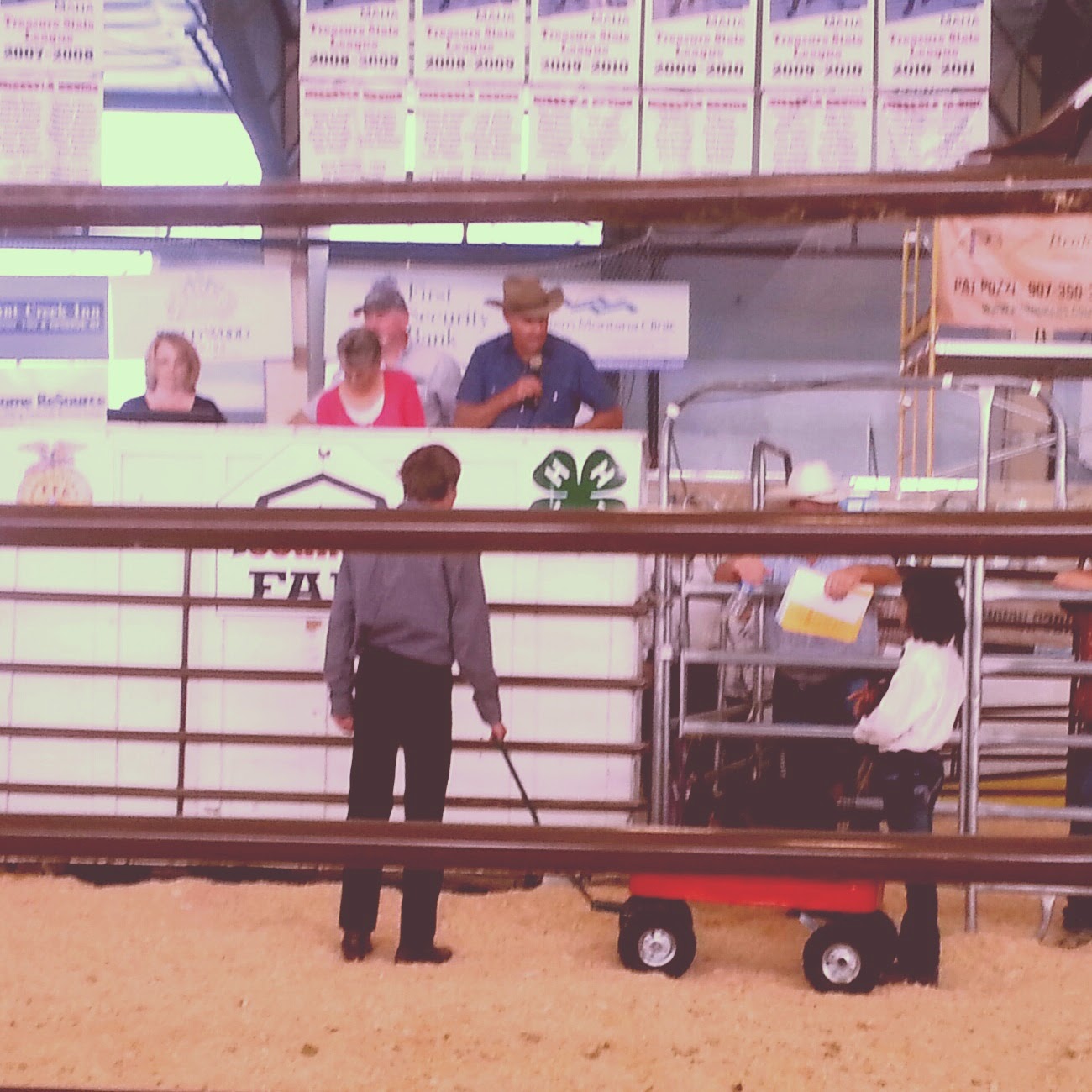
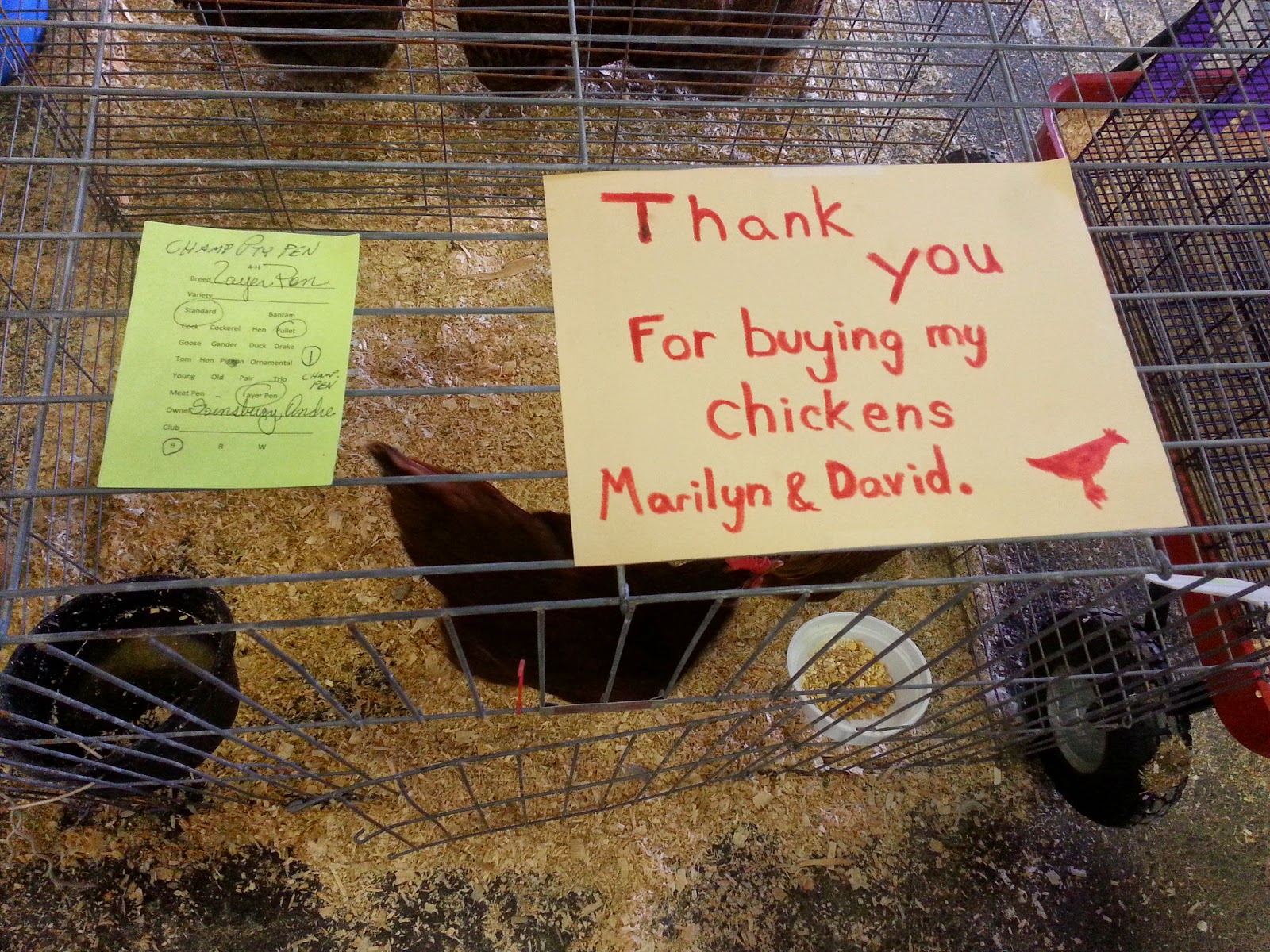
We were the highest bidders at the 4H/ FFA livestock auction on the GRAND CHAMPION layer pen!  It was an exciting day.  Not only did we get some beautiful Rhode Island Red hens, had fun at the auction, but we got to support 4H and some young livestock producers.  My wife was in 4H when she was young (she raised steer) and has a lot of very fond memories of it, so it was really gratifying for us to be on the other end of the auction and be able to buy some animals from kids.
If you have never been to a livestock auction, and in particular a 4H/ FFA auction, you are missing out of such an important part of the community.
The auction was a lot of fun- it was a great and supportive crowd full of local business people supporting the kids and the organizations, the auctioneer was excellent and the spotters were super engaged.  It is wonderful to see the kids with their animals, and the fair and auction represents a culmination of months of work.  All, when asked what they were going to do with their money, said "it was going toward savings".  It makes you feel good about the world.
We were only looking for two hens (based on space and the number of eggs we eat), but we ended up buying a pen of three, now we have to decide what to do with the third.  We asked about donating it back to the auction, but that was forbidden.  So I think we are just going to have three hens.  Perhaps expanding the run, too.

So, are these backyard chickens and example of sustainability?

These chickens will provide us with local eggs, and we can control how they are kept and fed, which is nice, but fiscally, this endeavor is not sustainable. I have enjoyed designing and building the coop, and the opportunity to support 4H has been great.  Between the cost of the annual permit, building materials, the Grand Champion layers, it will take us roughly a decade to save money on eggs!  We don't even eat many eggs.  However, we have met our goals on this one.
Proudly displaying our framed chicken permit in the coop.  It has only been recently (2007) that backyard chickens have been allowed in Missoula, and like most things in Missoula, the passage of an ordinance to allow up to six hens was controversial.  Like roundabouts and most things that are proposed, opponents actually said, that if passed, this would kill many children (I am not making this up).  Like the roundabouts, and backyard chickens, they passed. My wife was part of the city council then (and now), and a strong supporter of this ordinance when it was adopted.  So, when I say the permit is proudly displayed, I am proud as a chicken owner, but really proud of my wife's work on council for so many things, including this ordinance.

Here are some pictures with some more coop details:
 On top of the run is a green roof where I planted strawberries.
 Miles (our wired-haired Chihuahua) does not know what to make of the new residents.
 A couple of the roosts.


Yes, I embellished the rafter tails by cutting eggs...
it only made sense after cutting a hen-shaped vent.

Sunday, July 27, 2014

Progress on the Project List: chicken coop update

I have made a lot of progress on the garden project list,

but the one item I have been spending the most time with recently is the chicken coop and run, and it is nearly done.

With the exception of some paint, staples and some insulation, everything was reused, re-purposed and reclaimed and everything I purchased for the project (with the exception of the tin roofing- Craigslist) came from Home ReSource.  So, like many of these projects I have been accumulated parts and pieces as I find them for some time.  That means my little shop has been full of stuff for a while.  It is nice to see some space opening up, but that just means I have some room for the next project!

So, although the chicken coop and outdoor run are not done yet, here are some pictures of the progress and some details...

 The nest box is a re-purposed kitchen cabinet and the perch is an oak towel bar.

Access to the enclosed run is provided by a little sliding barn door.  The hardware is from a sliding closet door.
Yes, that is a chandelier.  The interior paneling, roof sheathing and other interior and exterior details are made from my old cedar fence boards when I replaced some panels last fall (click here for details of that project).
 The exterior (and interior) is made from salvaged tin roofing and cedar shakes.

The coop fits in nicely in the vegetable garden.  

You can see the repetition of a theme with the divided light door, trellises etc..

The outdoor run will have a green roof (in progress).  The plan changed; originally the run was going to be south-facing and in the native plants, but now it is to the north of the coop and in the vegetable garden.

So, in keeping with the vegetable theme, I will plant strawberries on it. That means now I will have about 100 potted Sedum lanceolatum, that I have been growing since the winter and babying all summer, to deal with...

Monday, June 18, 2012

The Little Green Roof: a year later

Things didn’t quite go as planned. Nothing bad happened, per se, but this is not the green roof I was expecting. If you recall- my goal was to try to find some native plants to grow on a green roof. I selected species I thought would do well- those that were easy to grow, were diverse, would tolerate hot and dry conditions, and had a low rooting depth and some that would spread via rhizomes to hold the soil. I wanted this green roof to really fill in and be lush and interesting.

Below is a picture from last summer showing the diverse species.
Here was my list of species with the rationale:

Prairie June grass (Koeleria macrantha), bunchgrass, prolific seeder, deepest root depth of the group
Idaho fescue (Festuca idahoensis), bunchgrass, prolific seeder, low rooting depth
Yarrow (Achillea millefolium), forms a mat and spreads with rhizomes, tallest plant (when in flower)
Rosy pussytoes (Anntenaria rosea) - forms a mat and spreads, their light foliage reflects sun
Cutleaf daisy (Erigeron compositus) - these form a low mat and flower for a long time (starting in April)
Lanceleaf stonecrop (Sedum lanceolatum). I used sedum because it is a requirement on any green roof. It is mandatory. And they enforce this. A nice succulent, though.
Elkhorn clarkia (Clarkia pulchella) this is for color- they are annuals, with very shallow roots, but they readily reseed

Here are the results:
All the lanceleaf stonecrop  survived and only one prairie junegrass survived- everything else died. Furthermore, perhaps to add insult to injury, the stonecrop reseeded like all get-out. The yarrow that was there last year seeded, and now there is a ton of yarrow, but no survivorship.
The few clarkia I planted went to seed and are filling in exceptionally well.
So, why did this happen? I have no idea. The sedum survival was no surprise, but the amount of volunteers was a surprise. They essentially carpeted the whole roof.
It's possible the prairie Junegrass needs more rooting depth- for whatever reason. This one was kind of a stretch- it had the greatest rooting depth of the bunch (a little native grass pun). The Idaho fescue was surprising and so were the pussytoes and cutleaf  daisy-m both have a super low rooting depth. In the wild you find them growing on a rock, and they are happy with it.

Perhaps rooting depth/ rooting media depth was not the issue with some of the failures. For example, with yarrow, maybe there were too many organics in the soil, so it just flowered its head off and died last year.
The roof is actually quite beautiful, and a lot more colorful and interesting than the species composition I had envisioned. There is nothing wrong with the roof- it is just not what I expected and I don’t know why. I need another year of data, so I’ll keep you posted.

Wednesday, August 24, 2011

Brown Roof; a Green Roof Update

Apparently brown is the new green.  This isn't really surprising though, and the golden grasses look appropriately colored for this time of the year.  After a wet and unseasonably cool spring and early summer, it's been hot and dry for weeks and it looks like the same is in store for weeks to come.

Everything is dormant now, in the hills and prairies around Missoula, and in our native plant garden, too, save for some goldenrod (Solidago rigida, and S. canadensis), blanketflower (Gaillardia arristata),  fleabane (Erigeron spp.) and hairy golden aster (Heterotheca villosa)

In my last update about the green roof on July 5, I said I'd water it once a week to get it established.  I didn't.  I guess that is one of the downsides of planting things on a roof is that they are easily overlooked. It is a little startling to look back to the first week of July and see how much the roof has changed- I'd forgotten it was so lush (see photo below).  And that happens every year.

I think the plants are fine, though.  If you look closely through the brown of the roof, a little life is showing itself.

Despite the temperatures in the mid 90's, the days are shorter, the nights longer, and and soon rubber rabbit brush (Ericameria nauseosa) will flower, and that takes us into fall.

Tuesday, July 5, 2011

2011 Garden Projects update

At the beginning of the year, I didn't think I had too many projects planned  for the garden, but I took a little time to write down a list of things to do, and I posted it here.  This is why I have a blog- it is my garden journal and it is a place to keep track of everything I'd otherwise scribble somewhere or forget to write down about the garden.


I planted some mountain ash (Sorbus scopulina), to replace the decadent aspen (Populus tremulodes)- and I even planted another one this weekend to replace an aspen that died suddenly last weekend in front of the hammock stand (below).  I have come to think of aspen as short-lived perennials, and that is fine.  Aspen bring so much wildlife- including wildlife that eat and kill them to the garden, that it is a fair trade (click here for more information).  Plus, we actually have more aspen in the garden now than when we started- they are just in different places, and they are always coming up in new areas.

I rearranged some plants in the front prairie, including getting rid of a green rabbit brush (Ericameria viscidiflora) and added a few Wood's rose (Rosa woodsii) close to the house.  In case you are wondering, the green rabbitbrush is now living at the Native Plant Garden at 8th and Grant.  Trust me.  It is fine.

I made a "cut-off" trail in front of the onion/ garlic bed (it is kind of obscured by the plants from this vew). The area near the grill shed is kind of a congested area in the garden and by adding this new trail/ path, people will be able to flow better. 
And along the way on the list, I added more things- a "green" or "living" roof for the grill shed, I started an insect collection to learn about and document all the insects in the garden (more on this soon), I removed the overhead garage door to the shop and replaced it with French doors (below), and I did some landscaping around the new space the French doors provide.

Adding the French doors to the shop was a fun little project and one I wished I had done a long time ago.  The doors add so much light and usable space in the shop.  Plus, they just look better.  I got all the materials for this at Home ReSource (a building materials re-use center, and my favorite place in the world to shop).
Green roof update
I didn't realize how much the green roof had grown, until I looked back on the post and slideshow from this spring. In general it is doing really well.  It is starting to fill in, and weeding has not been an issue.  I watered it for the first time yesterday (I planted it on April 24, but it was a very cool, wet spring).  Now that the weather has dried out and it has gotten hot (Sorry Susan, I know this mid-80's weather is not hot) or, perhaps, the weather has gotten more seasonal, I might water it once/ week through the summer. Here are some pictures showing the progress.
The picture below was taken right after planting, and as you can see, since then it has really filled in.
Below is a view looking down on the green roof.  It looks like a little prairie- just as planned.  All the plants are native to the Missoula area and include: Prairie June grass (Koeleria macrantha), Idaho fescue (Festuca idahoensis), Yarrow (Achillea millefolium), Rosy pussytoes (Anntenaria rosea), Cutleaf daisy (Erigeron compositus), Lanceleaf  stonecrop (Sedum lanceolatum), and  Elkhorn clarkia (Clarkia pulchella).  Click here for information about the green roof, including why I chose these plants.


To see the changes on the roof- here are a few pictures:  
Before- the old metal roof.
After I installed the green roof.
After some growing- it has really changed a lot.  A little tip- for garden projects, always take your "before" pictures in late winter, and your "after" pictures in the summer!
I made great progress on the list, but I still need to make that 3 bin composter for my wife, our compost management supervisor. But a new project has come up- another grape arbor.  There is always something to do, and a place to write it down.